

Quick answer
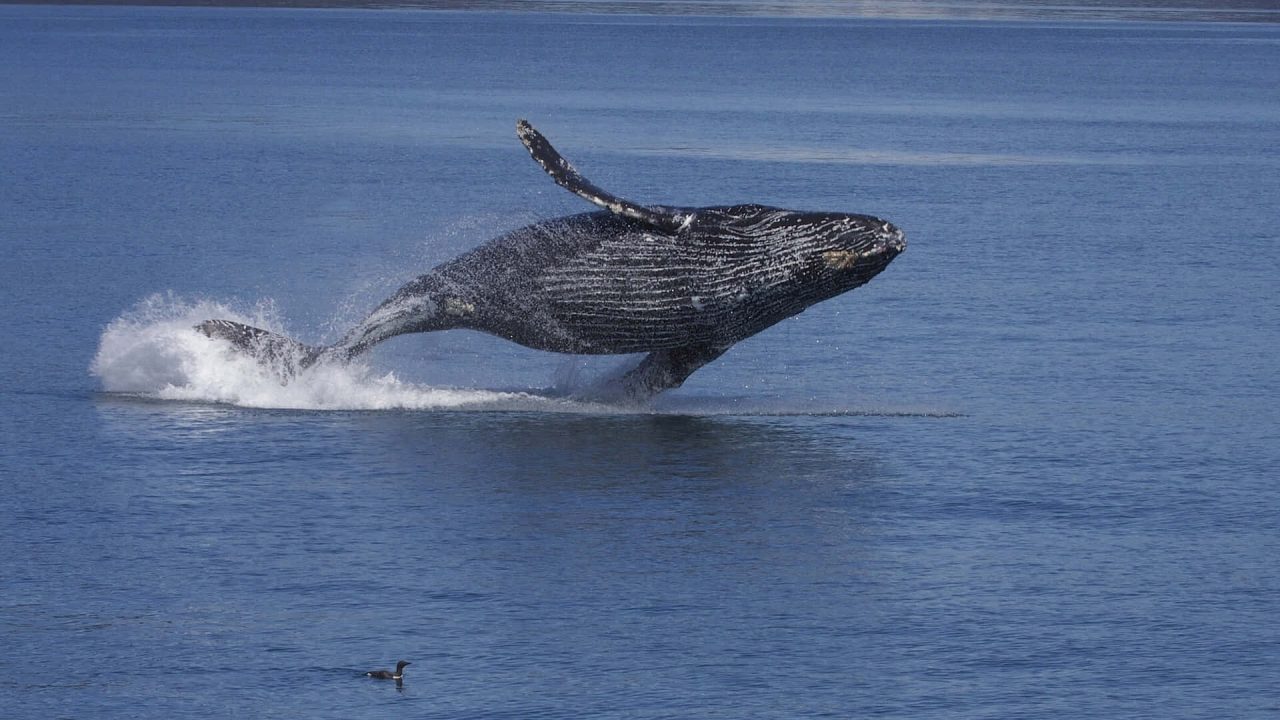
Yes—humpback whales, sperm whales, Bryde's whales, and minke whales inhabit Japanese waters throughout the year, with seasonal peaks between December and April. Humpback whales migrate from northern feeding grounds to breed in the warm subtropical waters around Okinawa's Kerama Islands and the Ogasawara archipelago. Sperm whales and Bryde's whales remain resident in deeper offshore zones year-round, while minke whales pass through coastal areas during spring and autumn migrations.
Japan's coastline stretches across 3,000 kilometers of the North Pacific migration corridor, positioning the archipelago directly along routes used by baleen and toothed whales moving between Arctic feeding zones and tropical breeding grounds. The Kuroshio Current—a warm-water conveyor that flows northward along Japan's Pacific coast—creates nutrient upwellings that sustain krill and fish populations, drawing whales into coastal visibility ranges throughout the calendar. Humpback whales dominate winter sightings between late December and early April, when breeding aggregations form in the shallow banks surrounding Okinawa and the Ogasawara Islands, 1,000 kilometers south of Tokyo. Adult males perform competitive surface displays and vocalizations audible on hydrophones, while females nurse calves in protected bays before the northward return migration begins in March. Success rates for humpback encounters during this window exceed 90 percent on multi-day expeditions, with breach and tail-slap behaviors occurring frequently in calm morning conditions. Sperm whales and Bryde's whales occupy deeper offshore waters year-round, feeding on squid and schooling fish along the continental shelf edge. These species require longer transit times to reach—typically 60 to 90 minutes by vessel from departure points in Kochi or Chiba—but offer consistent sighting opportunities outside the humpback season. Bryde's whales, distinguished by three parallel ridges on the rostrum, surface predictably near seamounts where tuna and mackerel concentrate. Minke whales appear during transitional months—April through June and September through November—as they migrate between the Sea of Japan and northern Pacific feeding areas. These smaller rorquals favor coastal embayments and are the species most commonly sighted from shore-based observation points along Hokkaido's northern peninsula. The question of whether whales frequent Japan is resolved by migration data spanning five decades: at least eight cetacean species use Japanese waters as breeding habitat, feeding corridor, or year-round residence, with concentrations varying by latitude, depth, and sea-surface temperature across a documented annual cycle.
“Japan's position along the North Pacific migration corridor places eight cetacean species within consistent viewing range throughout the year.”
Confirming Are There Whales in Japan: Migratory Patterns and Species
Japan's extensive coastline and varied climate support a diverse marine ecosystem that serves as a vital corridor for numerous whale species. These migratory patterns ensure that whales are consistently present in Japanese waters throughout different times of the year.
30 species documented
Scientific surveys confirm that approximately 30 species of cetaceans inhabit or migrate through the waters surrounding the Japanese archipelago.
Humpback whale wintering grounds
Humpback whales travel to the subtropical waters of the Okinawa and Ogasawara Islands each winter to breed and nurse their calves in protected bays.
Sperm whale year-round presence
The deep waters off the Ogasawara Islands are known to host resident populations of sperm whales, making them a reliable location for sightings regardless of typical migration cycles.
Kochi coast migratory path
The Pacific coast of Kochi serves as an important migratory route for Bryde's whales, which are frequently observed feeding in these nutrient-rich waters.
Ogasawara Islands marine protected area
The remote Ogasawara Islands, a UNESCO World Heritage site, provide a sanctuary for various marine mammals due to the surrounding deep-sea trenches and clean oceanic environment.
Diverse ocean currents influence
The intersection of the warm Kuroshio Current and cold Oyashio Current creates a highly productive environment that attracts large concentrations of marine life, including baleen whales.
Dispelling Myths About Are There Whales in Japan
Common skepticism often arises from the mistaken belief that whale sightings in Japan are rare or unpredictable. Scientific monitoring and established operator records confirm that diverse whale species frequent these waters consistently throughout their migration periods.
MythWhales in Japan are merely seasonal anomalies.
FactScientific monitoring and tracking data confirm that whale migration patterns to regions like the Ogasawara Islands, Okinawa, and Kochi are consistent and predictable.
MythWhale sightings are purely based on luck.
FactOrganized operator records demonstrate that whale presence is tracked daily, with specific windows like the 08:00–13:00 arrival window chosen to maximize sighting success.
MythIt is impossible to verify if whales are actually present before booking.
FactWhale watching hubs maintain monitoring networks that confirm species activity, providing operators with the data necessary to guide vessels to active areas.
When to Observe Whales in Japan: Seasonal and Daily Windows
Whale watching in Japan follows distinct seasonal patterns based on regional migration, with the period from January to April serving as the primary window for most sightings. Daily, the best arrival window is 08:00–13:00, as morning conditions typically feature lower wind speeds and calmer seas that facilitate spotting.
January–March
Low15°C–20°C in Okinawa; cooler north. Humpback whales migrate to Okinawa and the Kerama Islands during these months.
April–May
Moderate18°C–23°C; mild temperatures. This period marks the tail end of the southern migration and offers reliable sightings in varied locations.
June–August
High25°C–30°C; humid and warm. Sperm whales are more frequently observed off the coast of Hokkaido during these summer months.
Weekday mornings
Low—
Morning tours between 08:00 and 13:00 provide calmer seas and higher success rates for whale sightings compared to afternoon outings.
Verdict: For the highest probability of sightings, plan your visit for a weekday morning between 08:00 and 13:00 during the peak months of February or March.
Operating Hours for Are There Whales in Japan Excursions
Excursions operate daily across primary observation hubs in Japan. These standard operational hours provide a consistent reference for planning your visit.
| Monday | 08:00–17:00 | |
|---|---|---|
| Tuesday | 08:00–17:00 | |
| Wednesday | 08:00–17:00 | |
| Thursday | 08:00–17:00 | |
| Friday | 08:00–17:00 | |
| Saturday | 08:00–17:00 | |
| Sunday | 08:00–17:00 |
Navigating to Where Are There Whales in Japan
Whale watching hubs in Japan are located in the Ogasawara Islands, Okinawa (Kerama), and Kochi. Access to these regions requires a combination of domestic flights, ferries, or regional train transport.
Tokyo Takeshiba Pier to Chichijima (Ogasawara Maru)
Naha Airport to Kerama Islands (Ferry connection required)
JR Dosan Line to Kochi Station
Check availability
Common questions about are there whales in japan
Everything you need to know about are there whales in japan